
North Carolina Medicaid Is Changing

North Carolina Medicaid just published a major update on how federal law is changing the program. Some of your clients will face new requirements to keep their coverage. Some may lose it entirely. And every one of those coverage changes affects your authorizations, your billing, and your revenue.
Here’s a breakdown of the four changes NCDHHS announced, what they mean for your agency, and what to do now.
1. Work and community engagement requirements start January 1, 2027
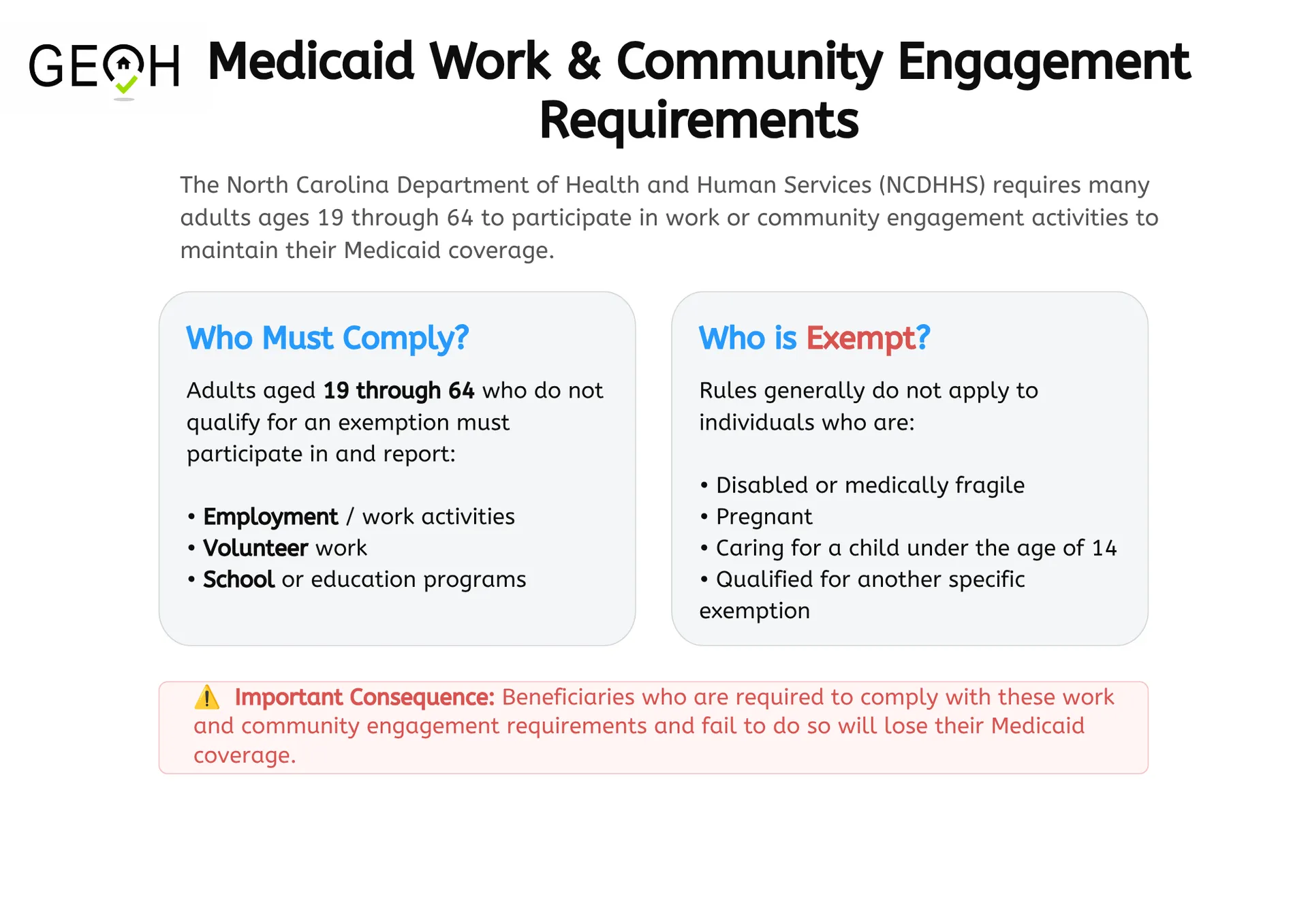
Many adults ages 19 through 64 will need to work, volunteer, or attend school to keep their Medicaid coverage.
NCDHHS calls these work and community engagement requirements.
The rules generally apply to adults who are not disabled, not pregnant, not caring for a child under 14, and don’t qualify for another exemption. Beneficiaries who are required to comply and don’t will lose coverage.
Why agencies should care: Most of the clients you serve for personal care or in-home aide services likely qualify for a disability-related exemption, but “likely” is not “confirmed.” Family members in the household who help coordinate care may also be on Medicaid themselves and subject to the new rules. Coverage churn in a client’s household creates missed renewals, returned mail, and confusion that spills over into your visits.
What to do: Familiarize your intake and care coordination staff with the exemption categories on the NC Medicaid Work and Community Engagement Requirements page so you can point clients and families to accurate information.
2. Six-month renewals start January 1, 2027
Today, most beneficiaries recertify once a year. Starting January 1, 2027, many adults ages 19 through 64 will need to renew every six months.
Why agencies should care: Twice as many renewals means twice as many chances for a client to miss a recertification letter and lose coverage mid-service. Procedural terminations — losing coverage over paperwork, not eligibility — are already one of the biggest causes of surprise claim denials. This doubles the exposure.
What to do:
- Check your clients’ Medicaid eligibility on the 1st and 15th of each month.
- Build a renewal tracking process now. Know each client’s recertification date and check in 30 days ahead.
- Verify eligibility before every billing cycle, not just at intake. A client who was covered last month may not be covered this month.
- Coach caregivers to flag it when clients mention letters from DSS they don’t understand.
GEOH’s billing packages can do this for you! We will let you know if your eligibility ever expires before you see denied claims! Click here to read more about our billing packages!

3. Retroactive coverage is shrinking
Right now, Medicaid can pay medical bills going back three months before an application. For applications filed on or after January 1, 2027, that window shrinks to one month for most adults ages 19–64, and two months for children, adults 65 and older, and people with disabilities.
Why agencies should care: If you’ve ever started services for a client whose Medicaid application was still pending, retroactive coverage is what eventually paid those claims. That safety net just got much smaller. Starting services weeks before an application is filed could mean visits that never get reimbursed.
What to do: Tighten your intake process. Confirm application dates before starting service, and encourage families to apply the moment there’s a medical need.
Note: Yes! GEOH can do back billing for your agency for up to six months! Click here to set up a meeting to talk about back billing!
4. Many non-citizens lose Medicaid on October 1, 2026
This is the change with the nearest deadline. Beginning October 1, 2026, federal law limits full Medicaid coverage to U.S. citizens and nationals, lawful permanent residents (green card holders), Cuban and Haitian entrants, and COFA migrants.
Beneficiaries in many other lawfully present categories will lose coverage, including refugees, asylees, humanitarian parolees (including Ukrainian and Afghan parolees), and applicants for green cards, asylum, or TPS who haven’t been approved yet.
Those who lose coverage may still qualify for Emergency Medicaid, but that only covers severe hospital emergencies, not home care.
Why agencies should care: If any of your current clients fall into an affected category, their personal care authorizations end with their coverage on October 1, 2026. That’s less than three months away. This also affects your workforce planning if caregivers or their family members rely on Medicaid coverage tied to one of these statuses.
What to do:
- Review your client roster now and identify anyone who may be affected. Don’t wait for a denied claim to find out.
- Encourage affected clients to make sure their local Department of Social Services has their current address, and to respond immediately to any letter about immigration status.
- If a client has become a lawful permanent resident but DSS doesn’t know, updating that record could preserve their coverage.
- Point families to alternatives: ACA Marketplace coverage at HealthCare.gov, federally qualified health centers, and free and charitable clinics.
The bottom line for your agency
Between October 2026 and January 2027, North Carolina Medicaid eligibility is going to move more than it has since expansion. Agencies that track renewal dates, verify eligibility every cycle, and talk to clients early will keep revenue steady. Agencies that don’t will find out about coverage losses the hard way, through denied claims.
The clients most at risk of falling through the cracks are the ones who don’t understand the letters showing up in their mailboxes. Your caregivers are in those homes every week. A simple “Have you gotten anything from DSS lately?” can save a client’s coverage and your authorization.
And if tracking eligibility, authorizations, and billing across a changing Medicaid landscape sounds like more than your current system can handle, book a demo with GEOH. We help North Carolina agencies catch coverage problems before they become denied claims.
Disclaimer: This article is provided for general informational purposes only and does not constitute legal, financial, compliance, or eligibility advice. Medicaid policies change frequently, and details described here may be updated, delayed, or revised after the publication date. We make no guarantees about the accuracy, completeness, or timeliness of this information and are not responsible for decisions made based on it. Don’t rely on this article alone — always verify current requirements directly with official sources, including NC Medicaid (NCDHHS), your managed care plans, and your agency’s own legal or compliance advisors before making decisions that affect your clients, staff, or billing.