
Discover the Best EVV Platforms Tailored for Home Care Professionals

If you run a home care or home health agency, you already know that Electronic Visit Verification (EVV) isn’t optional. It’s federal law. Knowing you need an EVV solution and knowing which one is right for your agency are two very different challenges. With dozens of vendors on the market, each claiming to be the “easiest” or “most compliant,” it’s easy for busy agency owners and administrators to end up comparing feature lists instead of running their business.
This guide breaks down what EVV actually requires, what separates a good platform from a great one, and why GEOH has become the go-to choice for home care agencies that want a system that keeps them compliant, keeps caregivers happy, and keeps revenue flowing.
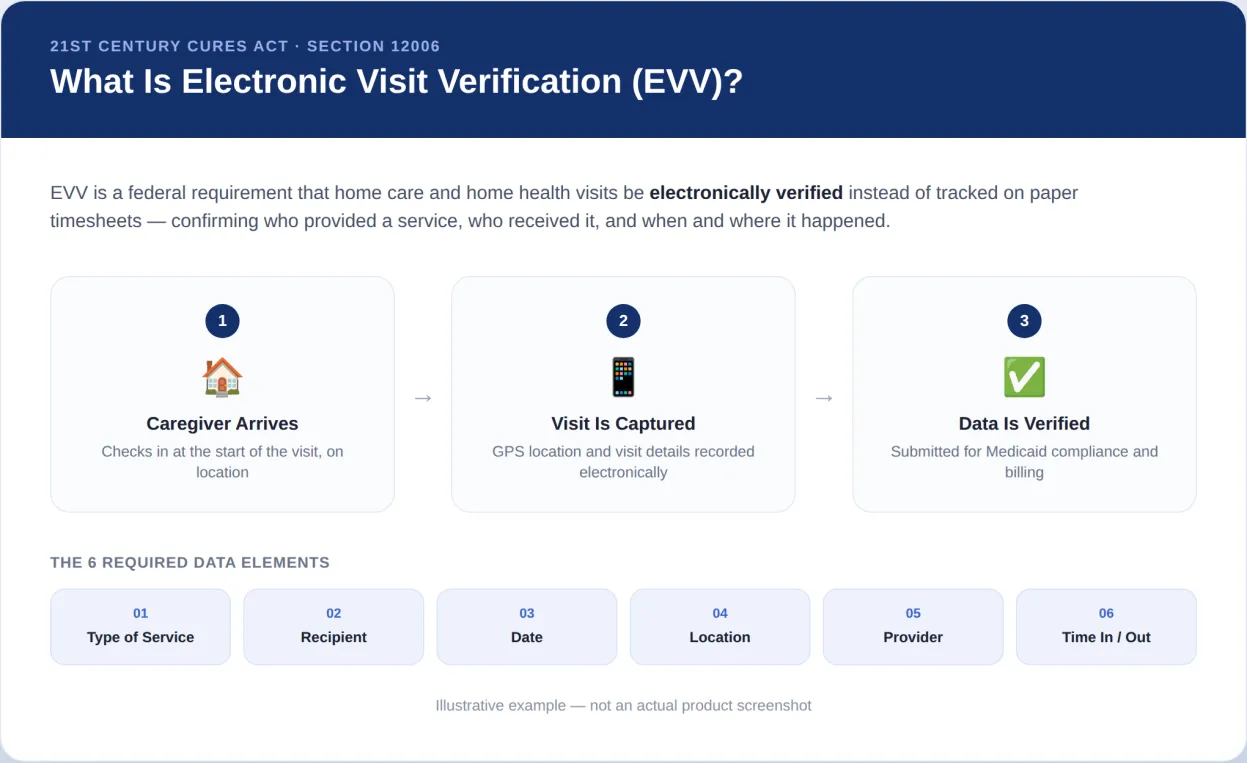
What Is EVV, and Why Does It Matter?
Electronic Visit Verification is a technology requirement created under Section 12006 of the 21st Century Cures Act. It mandates that agencies providing Medicaid-funded personal care services and home health services electronically verify each visit rather than relying on paper timesheets. The compliance deadline for personal care services took effect January 1, 2020, with home health services following on January 1, 2023.
To meet federal requirements, an EVV system must electronically capture six specific data points for every visit:
- The type of service performed
- The individual receiving the service
- The date of the service
- The location where the service was delivered
- The individual providing the service
- The time the service begins and ends
States that fail to enforce these requirements risk a reduction in federal Medicaid matching funds, which is one reason oversight of EVV compliance has increased in recent years. This is why so many state Medicaid programs are strict about which EVV models and vendors agencies can use. Some states operate a closed, state-mandated system, while others allow agencies to choose their own vendor under an “open” model, and some rely on third-party aggregators to collect data from multiple systems. Before you evaluate software, confirm which model your state requires.
What to Look for in an EVV Platform
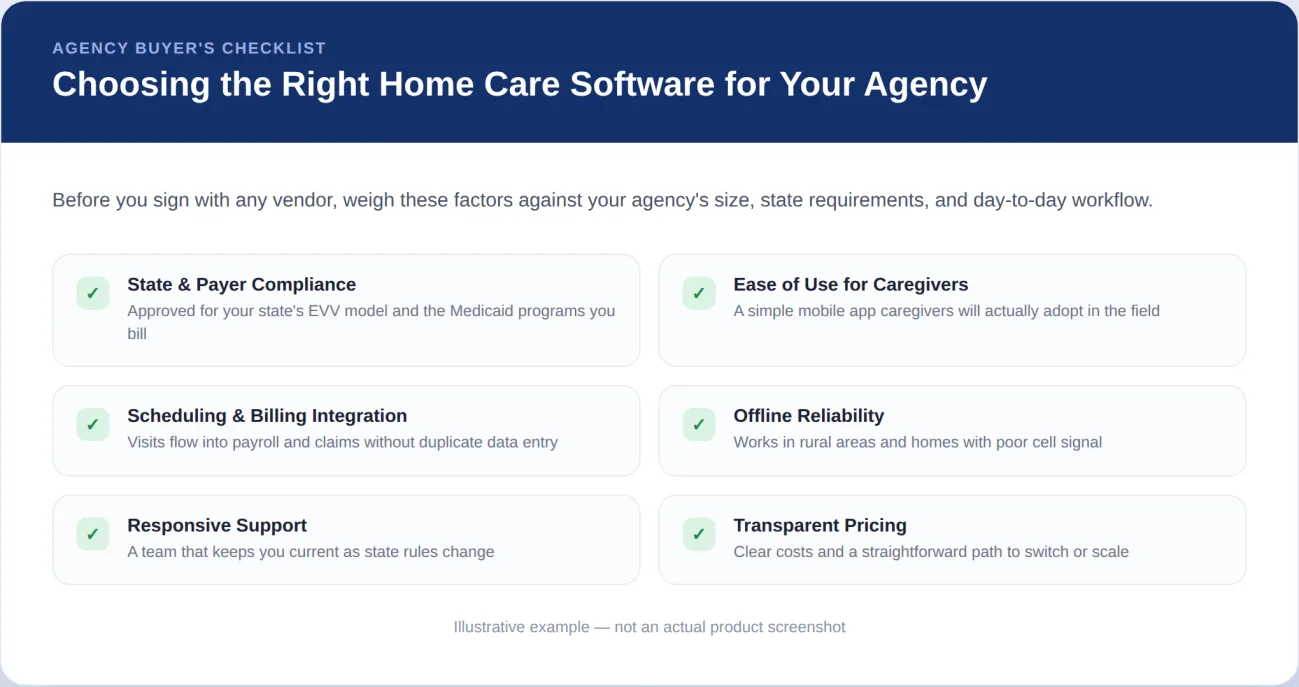
Not all EVV tools are created equal, and the cheapest or flashiest option isn’t always the best fit for a home care agency’s day-to-day reality. As you compare platforms, look for:
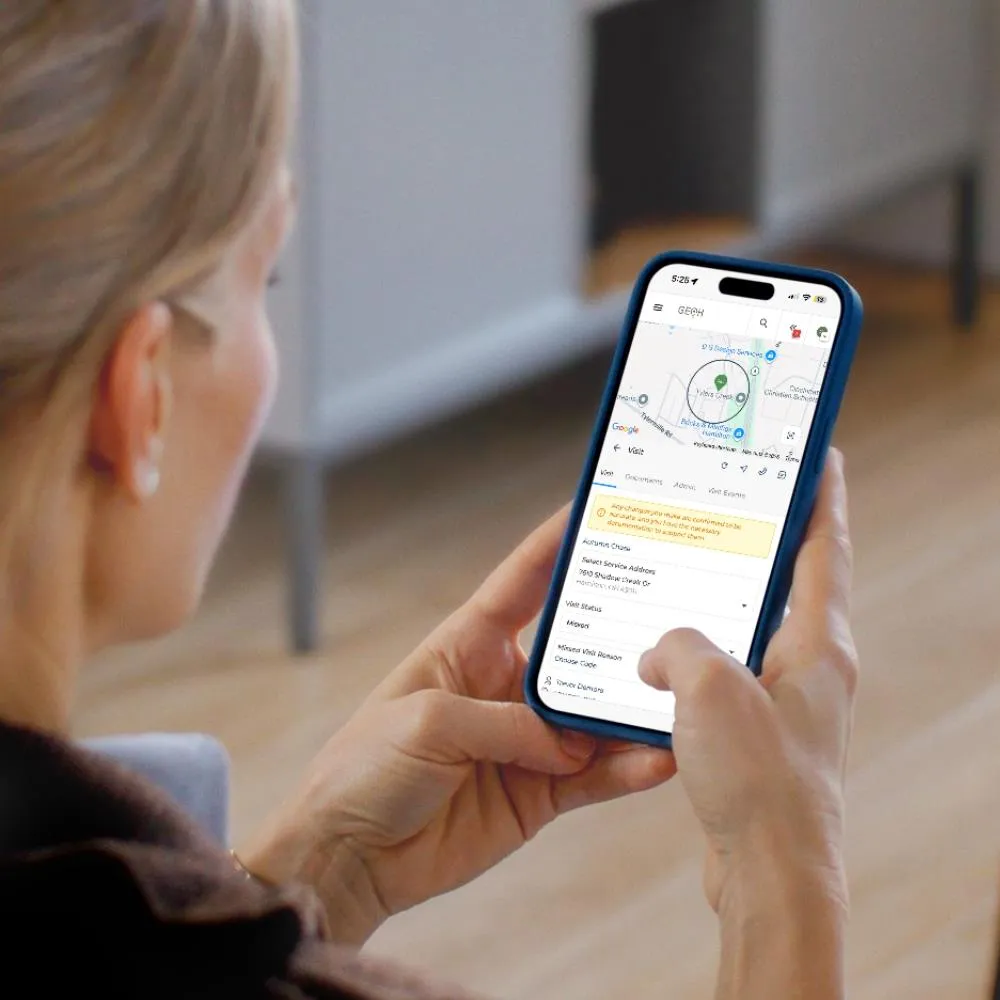
- GPS-verified check-in/check-out that confirms caregivers are physically at the client’s location, not just self-reported time entries
- State and payer compliance across the specific Medicaid programs, managed care organizations, and aggregators your agency bills
- Offline functionality for caregivers working in rural areas or homes with poor cell signal
- Seamless integration with scheduling and billing so a verified visit flows straight into payroll and claims without duplicate data entry
- An intuitive caregiver-facing app; if it’s confusing, caregivers will resist using it, and compliance suffers
- Real-time alerts for missed, late, or incomplete visits so office staff can intervene before a claim gets denied
- Transparent pricing and responsive support, since EVV rules change frequently and you need a vendor that keeps you current
Why GEOH Is the EVV Platform Built for Home Care Professionals
Rather than treating EVV as a standalone checkbox, GEOH builds electronic visit verification directly into a single platform that also handles scheduling, caregiver management, and billing. For agency owners, that means compliance and revenue live in one system instead of several disconnected logins.
Compliance woven into every visit. GEOH’s EVV solution captures GPS-verified check-in/check-out, automated data submission, and real-time visit tracking, covering all six federally required data elements automatically every time a caregiver clocks in. The team has also built deep, state-specific expertise in mandates like Ohio, Illinois, and Virginia billing requirements, so agencies aren’t left guessing when state rules shift.
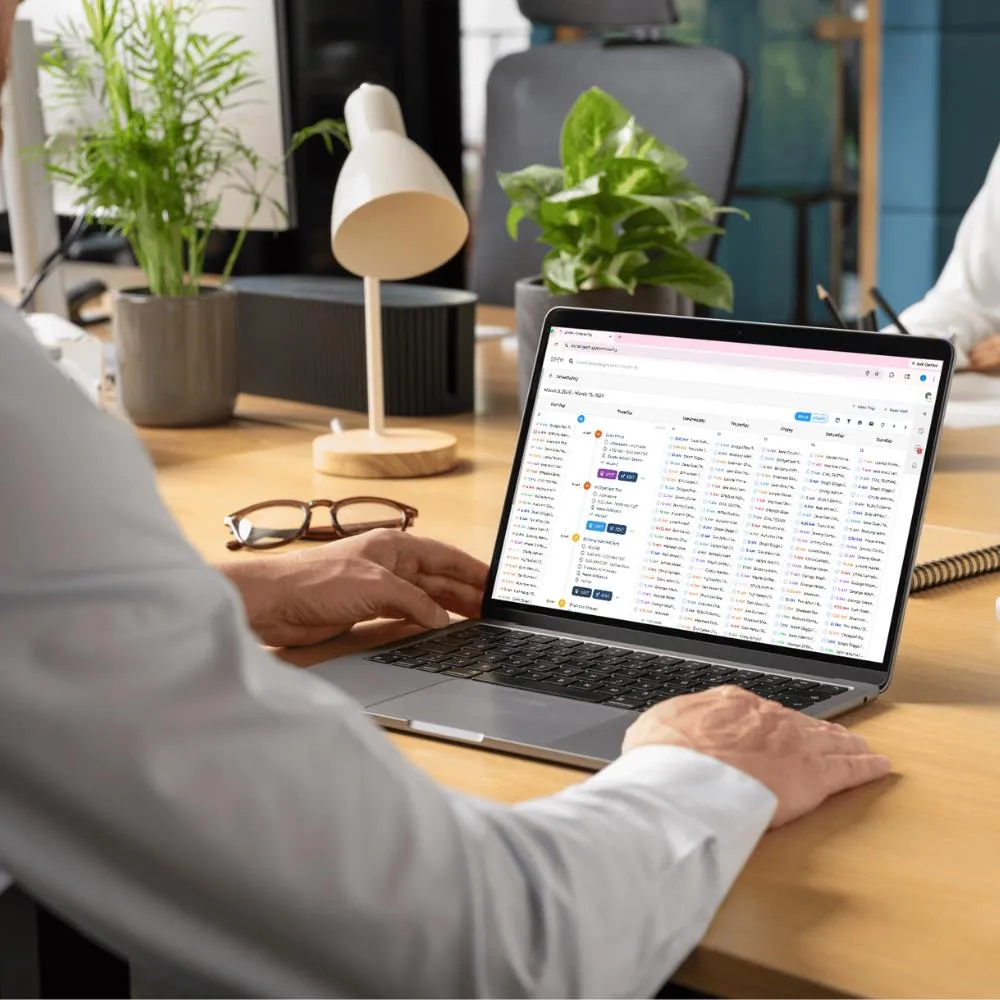
One connected system for scheduling and billing. A verified visit flows straight into SMART Scheduling, which assigns caregivers based on skills, proximity, and availability to cut down on missed visits and wasted travel time. From there it heads into SMART Bill, GEOH’s automated claims engine that flags errors before they turn into denials. Agencies that want extra support can add GEOH’s dedicated billing team rather than managing claims alone.
Results agencies can measure. GEOH agencies report getting paid roughly 15% more on average after switching from in-house billing, cutting manual administrative work by more than half, and, in at least one documented case, recovering $200,000 in back billing that had gone uncollected.
Recognized by the agencies that use it. GEOH holds a 4.9-star rating on Capterra across 167 reviews, with 2026 badges for “Best Ease of Use,” “Best Value for Money,” and “Top Alternative,” and near-universal positive sentiment from reviewers.
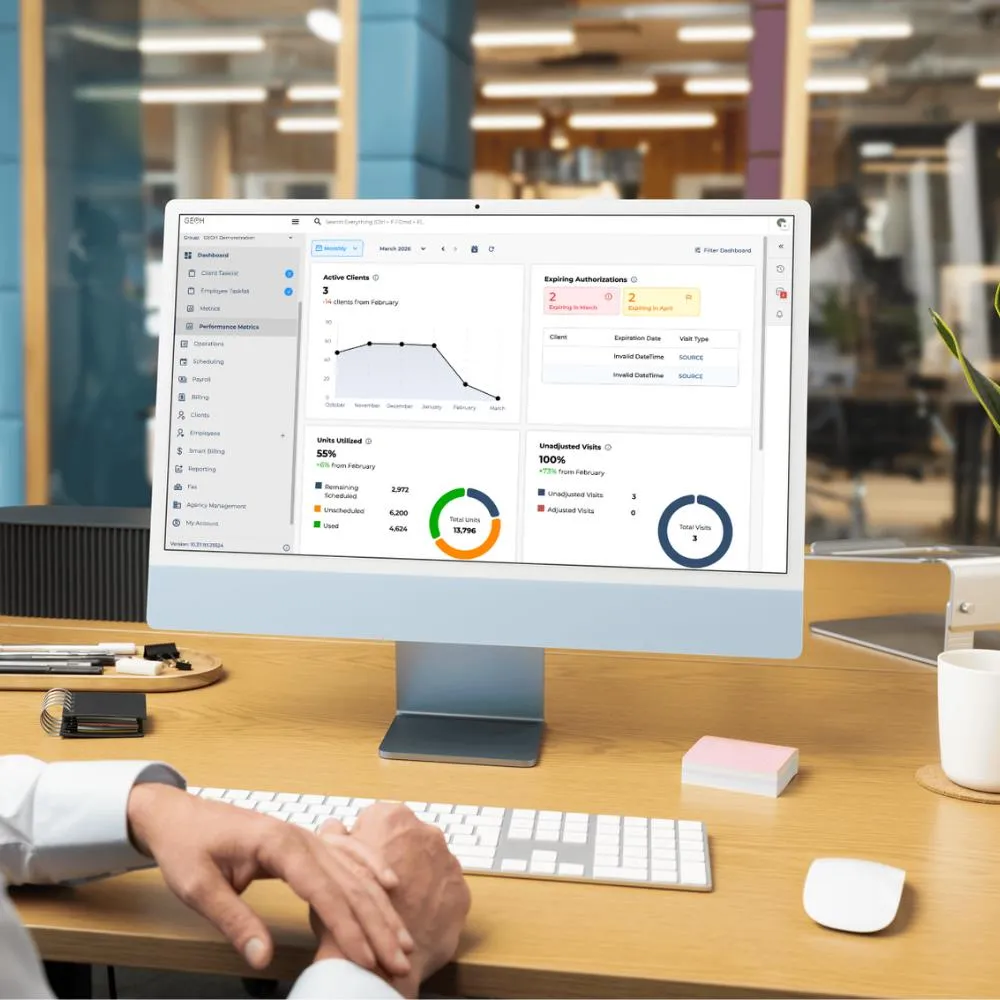
Built for scale. GEOH now supports more than 800 home care agencies and over 12,000 active users nationwide, with an Executive Compliance Dashboard that gives agency leaders visibility into EVV compliance and revenue side by side. It’s built specifically for the realities of home-based care, including spotty connectivity and high caregiver turnover, rather than adapted from a generic field-service tool.
How to Evaluate and Switch Without Disrupting Care
Changing software can feel risky when caregivers are already stretched thin, but a well-planned transition minimizes disruption:
- Confirm your state’s EVV model and get a list of approved vendors or aggregators before you start demos.
- Involve a few frontline caregivers in testing the mobile app; their buy-in determines whether adoption is smooth or painful.
- Ask vendors direct questions about offline check-in, denial-management support, and how quickly they update the platform when state rules change.
- Request a data migration plan so client, caregiver, and scheduling history moves over cleanly.
- Set a go-live date with a short overlap period so office staff can compare the old and new system before fully cutting over.
For a deeper walkthrough of vendor evaluation, GEOH’s guide on how to choose the right home care software for your agency is a useful resource that walks through everything you need to know to make the right decision. It’s also worth checking what HCAOA, the national trade association for home care providers, publishes on state-level billing and compliance pressure, since that context shapes which features actually matter for your agency.
The Bottom Line
EVV compliance is non-negotiable, but the software you choose to meet that requirement doesn’t have to be a headache. The best platforms treat EVV as one piece of a bigger operational picture, connecting caregiver scheduling, visit verification, and billing so your agency stays compliant and gets paid accurately and on time.
If you’re ready to see how an all-in-one platform compares to the point solutions you may be using today, you can explore GEOH’s home care software, read real customer stories, or book a free strategy session with a home care specialist to walk through your agency’s specific EVV and billing needs.